Welcome to SWIM 2027
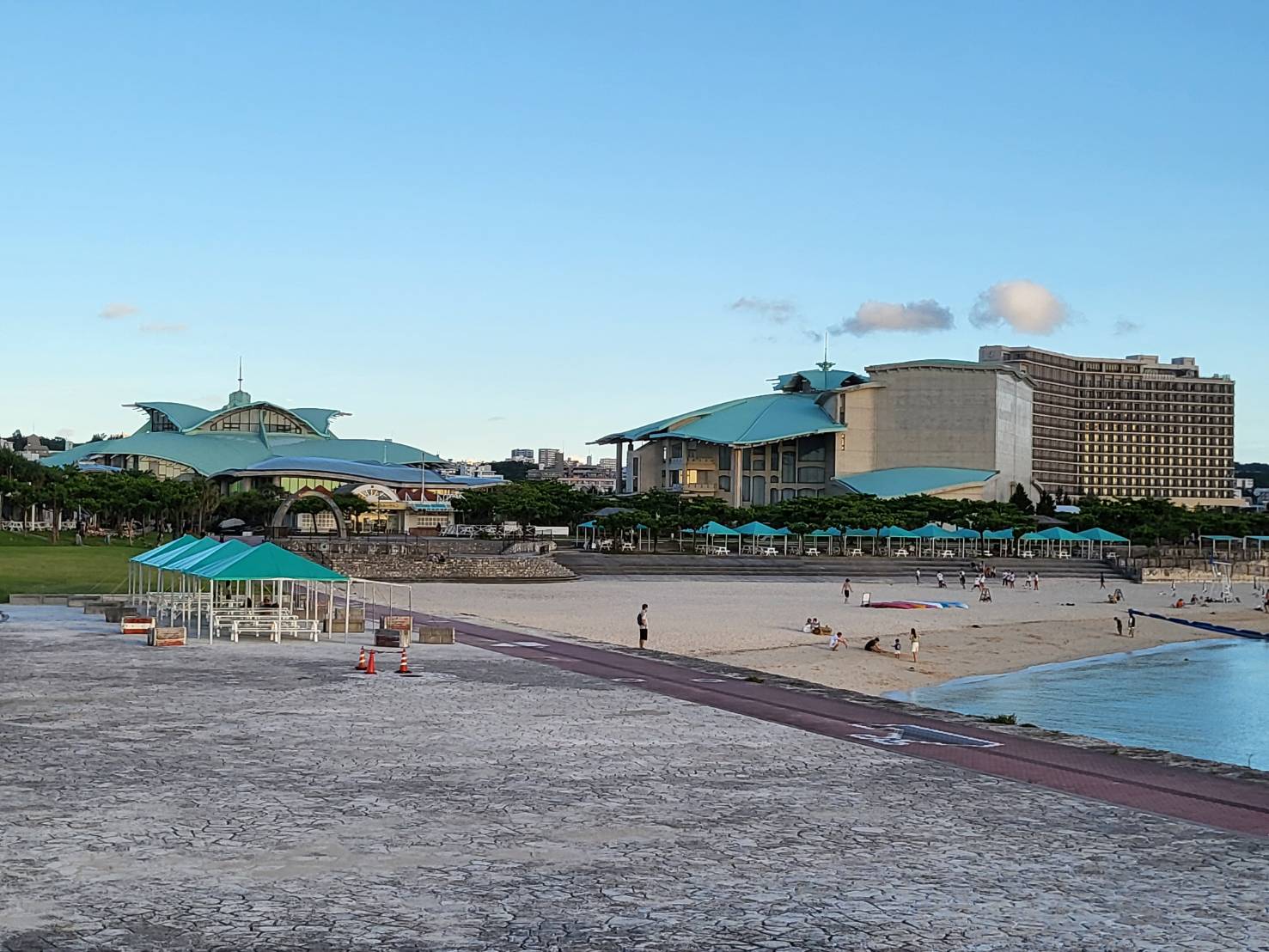
The Organizing Committee is honoured to invite you to the 29th Salt Water Intrusion Meeting (SWIM 2027), to be held at the Okinawa Convention Center in Ginowan, Okinawa, Japan, from 7 to 11 June 2027. Since 1968, the biennial SWIM conference has brought together hydrogeologists, oceanographers, engineers, and coastal managers to share advances in the science and management of salt water intrusion and coastal groundwater systems.
Building on the vision of "Integrating Land and Ocean Approaches in the Study of Coastal Groundwater" proposed at SWIM 2025 in Barcelona, SWIM 2027 will deepen the conversation around mutual learning on land–ocean interaction and invite the community to reach beyond the dilemmas and boundaries that often separate research fields, scales, and practices — upstream and downstream, observation and modelling, discipline and interdiscipline, local and global, research and implementation (Taniguchi et al., 2019).
Okinawa — a subtropical island prefecture of Japan with a rich heritage from the historic Ryukyu Kingdom — offers a unique setting for the meeting. Its limestone aquifers, underground dams, coral reef ecosystems, and dense coastal populations make salt water intrusion (SWI) and submarine groundwater discharge (SGD) tangible and pressing issues, and its long-standing research traditions in island hydrology provide a natural home for SWIM 2027.
Key Information
Dates
7 – 11 June 2027 (Mon – Fri)
Registration: 6 June (Sun)
Pre-Seminar: 2 – 4 June (provisional)
Venue
Okinawa Convention Center
Ginowan, Okinawa, Japan
Language
English
(all sessions & materials)
Important Dates
| Milestone | Date |
|---|---|
| Registration & abstract submission opens | 30 November 2026 |
| Abstract submission deadline | 31 January 2027 |
| Notification of acceptance | 28 February 2027 |
| Early Bird registration deadline | 31 March 2027 |
| Final registration deadline | 30 April 2027 |
| Pre-Seminar | 2 – 4 June 2027 (provisional) |
| Registration & Welcome reception | 6 June 2027 (Sun) |
| Conference sessions | 7 – 11 June 2027 (Mon – Fri) |
Conference dates are confirmed; milestone dates for submission and registration are tentative and will be finalised in the second circular.
Conference Theme
SWIM 2027 will continue the two core axes of the SWIM community — Salt Water Intrusion (SWI) and Submarine Groundwater Discharge (SGD) — while opening the programme to emerging and cross-cutting topics that connect coastal groundwater to wider Earth-system and societal questions.
The session themes are being finalised by the International Scientific Committee and will be published in the first circular.
Guided by the concept of "connections beyond the dilemma and boundaries", the programme will emphasise dialogue across disciplines (hydrology, oceanography, geophysics, geochemistry, microbiology, ecology), across scales (pore to basin, local to global), and across the boundary between research and implementation. See the Topics page for the full list of session themes.
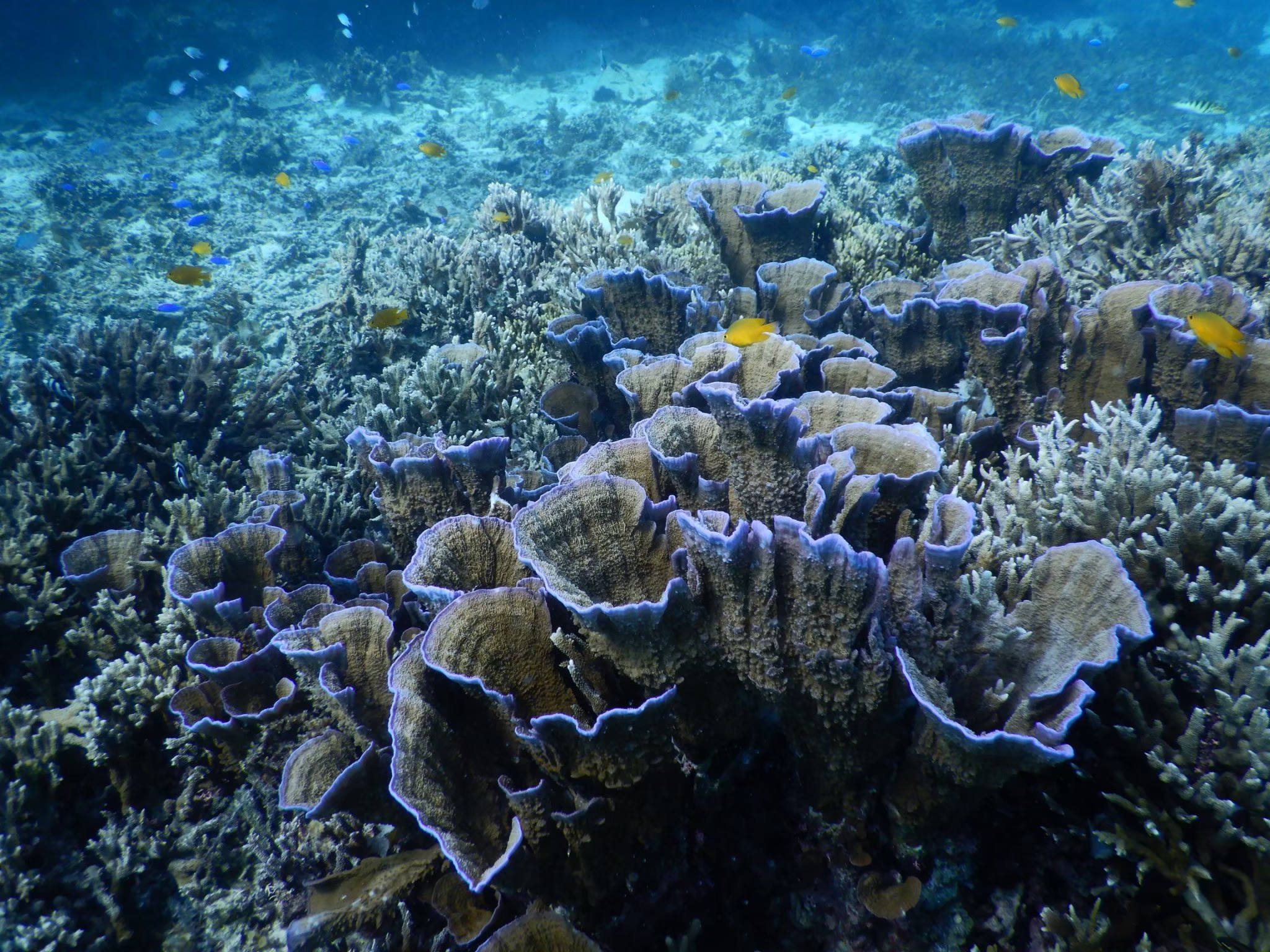
An Okinawan coral reef — one of the coastal ecosystems intimately connected to groundwater via submarine groundwater discharge (SGD).
Organisers
SWIM 2027 is co-organised by the Research Institute for Humanity and Nature (RIHN), Kyoto and the University of the Ryukyus, Okinawa, under the co-chairmanship of Makoto Taniguchi (RIHN) and Jun Yasumoto (RIHN & University of the Ryukyus). See the Committees page for the full list of organising members.
References
Taniguchi, M., Dulai, H., Burnett, K. M., Santos, I. R., Sugimoto, R., Stieglitz, T., Kim, G., Moosdorf, N., & Burnett, W. C. (2019). Submarine Groundwater Discharge: Updates on Its Measurement Techniques, Geophysical Drivers, Magnitudes, and Effects. Frontiers in Environmental Science, 7, 141. https://doi.org/10.3389/fenvs.2019.00141